He Knew All About Money Launderers. The U.S. Says He Joined Them

By Bob Van Voris and Jonathan Levin
November 20, 2019

Bruce Bagley, an international studies professor, knew all about how corrupt Venezuelan officials were moving vast sums into South Florida. He cultivated contacts with Latin American policymakers, top criminal lawyers and U.S. anti-money-laundering officials. And, prosecutors say, he knew how to get a taste for himself.

Bagley, a 73-year-old white-bearded University of Miami academic who wrote about drug trafficking and international organized crime, was charged this week with helping move about $3 million into the U.S. from Venezuela and taking a 10% cut.

Colleagues and neighbors expressed shock that a man known for his scholarship and care of his disabled wife could be arrested on such charges. But it was easy to see how Bagley — who in recent years had narrowly escaped a foreclosure sale — could have put his expertise to practical use, said John Polga-Hecimovich, a U.S. Naval Academy professor who knew him through academic networks.

“In the course of where he lives and in the research he does, I’m sure he came into contact with figures like the ones he’s accused of coming into contact with,” Polga-Hecimovich said Tuesday. “It’s plausible.”

Bagley’s lawyer, Daniel Forman, said his client would be vindicated. Bagley, who was placed on leave by the University of Miami, is free on a $300,000 bond.

His indictment Monday hinted at how Venezuelan’s vast corruption has seeped into South Florida, where officials associated with Nicolas Maduro’s and Hugo Chavez’s regimes have parked cash and bought real estate.

This year, the U.S. government auctioned off one such cache from Alejandro Andrade, a former Venezuelan treasurer who pleaded guilty to taking more than $1 billion in bribes. The sale included prize-winning show horses and mansions.

Criminals for years have concealed money stolen from state oil company Petroleos de Venezuela SA, the nation’s main source of income and foreign currency, American prosecutors have said. In September, a former company president was charged in Houston with money laundering in a probe of a $1 billion bribery scheme. A former Venezuelan government official and a former officer at Corpoelec SA, the state power company, were charged in June with taking bribes to award $60 million in business to Florida-based companies.

Intimate Acquaintance

It’s a milieu Bagley knows well. Testifying as an expert defense witness in a Miami cocaine-trafficking trial last month, he told jurors about his constant efforts to keep abreast: teaching six times a year in Colombia, talking with colleagues at professional conferences, scouring newspapers and government reports.

“I sometimes interview people in jail here in Miami and in other parts of the United States,” Bagley testified. “I try to use all the sources that are available to me, but it’s often, because it’s a clandestine and often-violent industry, sometimes difficult to get all the information that you need.”

Bagley is a native Californian who first saw the drug trade up close as a Peace Corps volunteer in Colombia, he told jurors. He got his undergraduate degree at the University of California, Berkeley, then a master’s and a Ph.D. from the University of California, Los Angeles.

He taught in Colombia and at the Johns Hopkins University School of Advanced International Studies before moving to Miami, where he recently finished his 30th year. He’s taught a generation of academics, government and law enforcement officials, published books and articles and testified as an expert about 100 times.

“He’s an icon,” said Jonathan Rosen, a political scientist who said he’s published books with Bagley and counts him as a mentor. Rosen described Bagley as somebody with a “big personality” and a boisterous laugh.

“He could retire any time,” Rosen said. “He does this because he really loves it.”

Laugh Line

Every year, Bagley teaches a course on drug trafficking, he told the trial jurors.

“He always said, ‘This is not a how-to course,’” said Miami lawyer Erick Cruz, a former student who was also the defense attorney in the cocaine trial, in which his client was convicted.

It wasn’t immediately clear why an academic with a reputation cultivated over decades would launder money.

Bagley supports his wife, who was disabled after a stroke. He lost a foreclosure judgment of $660,000 in 2014 after he and his wife defaulted on a mortgage, court records show. The bank allowed them to sell the property for less than they owed.

Bagley doesn’t own his current home in Coral Gables, part of a gated area tucked beside mangroves and Biscayne Bay, according to property records. On Tuesday, two SUVs were parked in the driveway. Bagley left the house at 9:23 a.m. in a blue button-down shirt, carrying a thick manila envelope and a book, and drove off in his black Nissan Rogue, declining to answer questions.

Almost 1,400 miles southeast, Venezuela is mired in a yearslong political and economic crisis caused by Maduro’s misrule and a decline in oil prices. The nation is a gallery of socialist showpieces in various stages of completion. Railway projects lead nowhere and an expansion of the hydroelectric dam system has been halted even as residents go without power.

The money that Bagley laundered, U.S. prosecutors said, was skimmed from such public works projects and the professor took a cut as it passed through his accounts.

He opened a bank account using a company he owned, taking in 14 payments from November 2017 to October 2018, according to the indictment. The payments came from Swiss and United Arab Emirates accounts held by a “purported food company” and a wealth management firm, prosecutors said. They accused Bagley of withdrawing 90% as cashier’s checks payable to an account held by an unnamed person and transferring the rest to his own account.

Even after the bank account was shut down for suspicious activity in October 2018, Bagley opened a second one in December, where he received money twice, prosecutors said.

The professor, as prosecutors told it, took chances of which he should have been aware: He was a consultant for FinCEN, a bureau of the Treasury Department that fights laundering. The sums were sometimes moved in chunks of more than $200,000, large enough to draw investigators’ attention.

That would leave “a pretty clear documentary trail leading to where the dead bodies are buried,” said Andrew Ittleman, a Miami defense lawyer.

Former student Nilda Garcia said Bagley inspired her to get her doctorate and she now teaches about trafficking herself at Texas A&M University.

“He’s been like a big inspiration in my life,” she said.

Garcia laughed when she remembered his office, full of books and papers from floor to ceiling. “It was insane,” she said.

“When someone is really that brilliant, sometimes the simple things are hard to do.”

The case is U.S. v. Bagley, 19-cr-00765, U.S. District Court, Southern District of New York (Manhattan).

— With assistance by Fabiola Zerpa

Click here to view the original article.

Regulator renews order targeting shell companies buying South Florida real estate

November 12, 2019
By Ashley Portero

The U.S. Department of Treasury’s Financial Crimes Enforcement Network (FinCEN) renewed its Geographic Targeting Orders (GTOs) for South Florida.

The region is one of 12 metropolitan areas undergoing a crackdown on real estate-related money laundering.

The order requires title insurance companies to identify individuals behind shell companies that facilitate all-cash purchases of residential real estate. It applies to transactions above $300,000.

That has a significant impact on the region, which has one of the nation’s largest supplies of $1 million condos. Wealth migration is fueling the Miami market, according to the Miami Association of Realtors, which reports Miami- area luxury home sales increased almost 12% in the third quarter of 2019.

The order, in effect Nov. 12 to May 9, 2020, does not require reporting for purchases made by legal entities that are U.S.-based publicly-traded companies.

Andrew Ittleman, partner at Miami law firm FIDJ, said South Florida’s proximity to Latin America and thriving real estate market makes it a hot-spot for money laundering. He noted several Venezuelans in government positions have been prosecuted for moving funds out of Venezuela and laundering them through South Florida real estate as the country descended into economic crisis.

“When you’re in Miami you can’t help but admire the beautiful buildings in our skyline,” Ittleman said. “But when you understand where some of the money has come from, the FinCEN efforts make more sense.”

FinCEN initially issued a GTO for Miami in 2015 — the only city in the nation targeted at that time.

The newest order includes Miami-Dade, Broward and Palm Beach counties, as well as Boston, Chicago, Dallas-Fort Worth, Honolulu, Las Vegas, Los Angeles, New York City, San Antonio, San Diego, San Francisco and Seattle.

“Back then, FinCEN determined that ill-gotten money, proceeds of crime of one variety or another, was making it into Miami’s legitimate stream of commerce through real-estate purchases,” Ittleman said. “The GTO allowed FinCEN to get more information about real estate transactions in real time, and it was so effective that it was spread out to other U.S. jurisdictions.”

Ittleman said he expects the U.S. Treasury Department will eventually need to formalize the GTOs by writing regulations, rather than renewing temporary orders every six months. But those regulations would likely face steep opposition from real estate developers and investors, he said.

“It would take a lot to put regulations in place,” he said. “in the end, the title insurance industry would need to champion it and it doesn’t look like that will happen anytime soon.”

Click here to read the full article.

The new policy will increase scrutiny and pressure on stem cell clinics, according to industry experts.

By Ashley Yeager
September 9, 2019

On Friday (Sept. 6), Google announced it would “prohibit advertising for unproven or experimental medical techniques such as most stem cell therapy, cellular (non-stem) therapy, and gene therapy.” The treatments, the company says in the statement, can have “dangerous health outcomes” and therefore have “no place” on the its platforms.

“Google’s new policy banning advertising for speculative medicines is a much-needed and welcome step to curb the marketing of unscrupulous medical products such as unproven stem cell therapies,” Deepak Srivastava, president of the International Society for Stem Cell Research, says in the statement. “The premature marketing and commercialization of unproven stem cell products threatens public health, their confidence in biomedical research, and undermines the development of legitimate new therapies.”

Some of these treatments have caused severe physical impairment, with several women going blind after receiving stem cell injections into their eyes. Scientists say many of the treatments’ claims are false, so the new policy could intensify scrutiny of the companies, according to The Washington Post. The US Food and Drug Administration has begun cracking down on the practices and marketing of stem cell clinics, which have otherwise largely skirted regulation.

“A number of us have pushed for this kind of policy over the years so this news is a welcome surprise,” University of California, Davis, stem cell biologist Paul Knoepfler tells The Post. He’s been criticizing the Google ads for stem cell treatments for years and says the move is a big deal because the ads recruited many of the same patients negatively affected by the treatments.

Andrew Ittleman, a Miami lawyer who represents several stem cell clinics, tells The Post the policy will damage companies with legitimate treatment claims. “It puts Google in the position of being a quasi regulator, taking on quite a significant amount of jurisdiction,” Ittleman says. “They’re painting the industry with a broad brush and companies with legitimate arguments are going to be collateral damage.”

The ban would go into effect in October, according to Fortune, and the company would not reveal how it would vet medical ads.

“The American Medical Association believes it is critical to distinguish between treatments that have been validated by appropriate scientific study, those that are promising, and those that are without foundation,” Patrice Harris, the association’s president, tells Fortune in an emailed statement. “We urge [Google] to make public the process they use to vet advertisements and what evidentiary standard they use for determining which treatments are appropriate to advertise.”

Despite the lack of details, proponents of the policy say it’s a big step forward and a long time coming. “These ads have been present on the Internet for at least 15 years—at least,” Sean Morris, chairman of the Society of Stem Cell Research, tells Fortune. “But better late than never.”

Click here to read the full article.

Money Laundering: US crackdown on Venezuelan cash

In 2018, a Venezuelan banker was convicted of operating a $1.2bn money-laundering scheme funded with stolen government money. Investigators say most cash was used to buy real estate in Florida.

August 23, 2019

Last year, a Venezuelan banker was convicted of running a $1.2bn money- laundering scheme, all with stolen government money.

Investigators say most of the cash was used to buy real estate in Florida. The money was stolen from a country that is in a deep humanitarian and economic crisis.

United States authorities have launched a renewed crackdown on these kinds of schemes.

Click here to read the full article.

Google is banning ads for quack cures after years of profiting from them

By Antonio Regalado
September 6, 2019

After brazenly taking ad money from health-care scammers, Google is finally saying no to ads for unproven stem-cell treatments.

New policy: Google, which pulls in more than $110 billion a year in online ad revenue, said in a statement posted on its advertising pages that under the new policy it will now “prohibit ads selling treatments that have no established biomedical or scientific basis.”

The policy will cover a host of bogus cures for cancer and ALS, as well as treatments that are under study but don’t have enough “formal clinical testing to justify widespread clinical use.” Ads for government-sanctioned clinical trials will be allowed, according to the Washington Post.

Big problem: Ads from stem-cell clinics have been a fixture of Google’s search results for years, funneling desperate patients to a growing industry of doctors who collect blood or other cells from patients, then re-inject them. Testimonials from celebrity NFL players and others have helped spread the quackery to sports medicine and orthopedics centers.

The treatments have little evidence to support their use and can be hazardous. Several people have ended up blinded or developed bizarre tumors. In China, the search giant Baidu was rocked after a 21-year-old college student died from a treatment he learned about in a promoted search result.

Growing embarrassment: Google’s advertising of sham medicine became a bigger liability in 2015 after the company launched Calico, a company seeking remedies for aging, and a health research subsidiary called Verily.

“We know that important medical discoveries often start as unproven ideas,” Google said in its statement today. “At the same time, we have seen a rise in bad actors attempting to take advantage of individuals by offering untested, deceptive treatments.”

Hype problem: Stem cells have been touted as the cure for just about anything, and some medical clinics claim the procedures are also exempt from regulation if they involve a person’s own cells, such as fat, blood concentrates, or bone marrow.

The US Food and Drug Administration has sometimes pursued the clinics, though, winning a case this summer against a Florida stem-cell company, US Stem Cell, and issuing a broad warning to consumers earlier this week.

Experts intervened: According to the International Society for Stem Cell Research, a body representing academic scientists, it helped draw Google’s attention to the role of ads in harming patients. In early 2019, executives from the internet giant were invited to presentations about the problems caused by the clinics as part of the National Academy of Sciences’ Forum on Regenerative Medicine.

“Google’s new policy banning advertising for speculative medicines is a much-needed and welcome step to curb the marketing of unscrupulous medical products,” the president of the society, Deepak Srivastava, said in a statement. “While stem cells have great potential to help us understand and treat a wide range of diseases, most stem cell interventions remain experimental and should only be offered to patients through well-regulated clinical trials.”

Ads still visible: The Washington Post, which first reported the new ad policy, says it will go into effect in October. A Google search today from Cambridge, Massachusetts, still returned numerous advertisements, such as one for the Boston Stem Cell Center, which sells a variety of treatments involving a person’s own cells.

Google as regulator?  Andrew Ittleman, a Miami lawyer who works for stem-cell clinics, told the Post that the ad ban could penalize “good” companies trying to follow regulations, as well as bad actors. Ittleman said some clinics had already been banned by Google starting two years ago.

“It puts Google in the position of being a quasi regulator, taking on quite a significant amount of jurisdiction,” he told the Post. “They’re painting the industry with a broad brush.”

Click here to read the full article.

New Google policy bars ads for unproven stem cell therapies

By William Wan and Laurie McGinley
September 6

Responding to ubiquitous online marketing by stem cell clinics selling unapproved treatments for everything from achy joints to Alzheimer’s, Google announced Friday it will no longer accept ads for “unproven or experimental medical techniques,” including most stem cell therapy, cellular therapy and gene therapy.

The Internet giant said it was taking the step after seeing “a rise in bad actors” trying to take advantage of patients by offering “untested, deceptive treatments.” Often, Google said in a post explaining the new policy, “these treatments can lead to dangerous health outcomes and we feel they have no place on our platforms.” Its new policy will prohibit ads for treatments that have “no established biomedical or scientific basis.”

The new position comes as stem cell clinics have grown into a sprawling direct-to-consumer industry. Some clinics have told patients their treatments can help them with ailments such as macular degeneration, ALS, multiple sclerosis and degenerative lung diseases. Scientists and medical associations have likened the procedures to modern snake oil and accused the purveyors of preying on the hopes of seriously ill patients. The untested treatments, many researchers say, is imperiling patients and the reputation of a promising field.

After years of little enforcement, the federal regulators have begun to crack down on the clinics. And the new Google policy will add to the growing scrutiny and pressure, industry experts said.

When asked by The Washington Post last December about its policies about advertising by stem cell clinics, Google declined to answer questions about actions against specific companies. In a statement, the company said: “If we find ads that violate our policies, we take immediate action, which can include taking down violating ads or suspending an account altogether.”

At the time, the company said its existing policies already prohibited marketing potentially dangerous and fraudulent health products — a stance some stem cell experts criticized as insufficient.

“Google’s new policy banning advertising for speculative medicines is a much-needed and welcome step to curb the marketing of unscrupulous medical products,” said Deepak Srivastava, president of the International Society for Stem Cell Research, a leading group of scientists that gave Google advice on the policy. “The premature marketing and commercialization of unproven stem cell products threatens public health, the confidence in biomedical research, and undermines the development of legitimate new therapies,” he said.

Some treatments have resulted in severe injuries, including at least five women who were blinded after stem cell clinics injected its product into their eyes.

Stem cell clinics say they are offering treatment to patients who have few other options and that their treatment may have ways of helping patients that science can’t yet explain.

Some industry representatives criticized Google’s new ad policy on Friday. The ban on ads will unfairly devastate “good” companies along with “bad actors” without discriminating which ones are trying to treat patients safely and follow evolving FDA regulations, said Andrew Ittleman, a Miami lawyer who represents several stem cell clinics.

In the past two years, Google had already begun refusing ads from several stem cell companies on a case-by-case basis, said Ittleman, who has been hired by a few such companies to try, unsuccessfully, to appeal such decisions with Google.

“It puts Google in the position of being a quasi regulator, taking on quite a significant amount of jurisdiction,” Ittleman said. “They’re painting the industry with a broad brush and companies with legitimate arguments are going to be collateral damage.”

Google’s new ad policy, however, is unlikely to put the industry out of business. Many clinics have shown an ability to adapt nimbly to new regulatory rules and changes such as Google’s ad policy.

“This kind of ad ban hits hard because most companies rely on Google for a large share of their quality sales leads,” said a former marketing head for a Florida stem cell company. “But there are plenty of other channels you can switch to — Facebook, Bing, Yahoo.”

The marketing executive, who spoke on the condition of anonymity to avoid professional retaliation, said “These kinds of businesses are pretty savvy and have had to adapt a lot already. Many have previously been kicked off Google already. You learn to pivot and be resourceful.”

Another recent example of the industry’s ability to adapt, experts note, came when the Food and Drug Administration won a landmark lawsuit in June against a stem cell company selling stem cell procedures that extract clients’ fat tissue, spin it to isolate certain cells, and inject them back into the body.

Health officials hailed the case as a turning point in the government’s struggle to regulate the booming industry. But ahead of the legal victory, the industry had already begun to shift. Because the FDA was focusing on fat-based treatments, many clinics switched to treatments derived instead from s blood, bone marrow and birth-related tissues, such as amniotic fluid and umbilical cord blood.

Google officials said Friday they would continue to accept ads for clinical trials cleared by the government. It said that while important medical discoveries often start as unproven ideas, “we believe that monitored, regulated clinical trials are the most reliable way to test and prove important medical advances.”

The ban will take effect across Google’s ad services, including YouTube and ads Google helps place on third-party websites. And the ban includes treatments that are rooted in scientific findings and preliminary clinical experience “but currently have insufficient formal clinical testing” to justify widespread use. The new policy, which will take effect in October, was detailed in a blog post by Adrienne Biddings, the company’s policy adviser.

The post said that the “digital ads ecosystem can only flourish if it’s a place that is safe and trustworthy for users.” The company said it will use a combination of machine learning and human review to enforce it.

To formulate the new approach, a spokeswoman said, the company’s policy team has reviewed the literature on the field and worked with various stem-cell experts.

Paul Knoepfler, a stem cell biologist at the University of California at Davis and longtime critic of the for-profit stem cell industry, called the new Google policy a big deal. Many patients who have been seriously harmed, he noted, were initially recruited as customers via Google ads.

“A number of us have pushed for this kind of policy over the years so this news is a welcome surprise,” Knoepfler said.

Click here to read the full article.

Florida Ad Valorem Taxation Update: First District Court of Appeal Broadly Interprets Charitable Use Exemption to Ad Valorem Taxation

In May, the First District Court of Appeal, which covers parts of North Florida and the Panhandle, issued an opinion broadly construing the charitable purpose exemption in Florida’s ad valorem taxation regime.  The opinion, Crapo v. Gainesville Area Chamber of Commerce2019 WL 1941241 (Fla. 1st DCA 2019) (hereinafter Gainesville Area), is a victory for taxpayers and provides an additional tool for taxpayers seeking to achieve exempt status for their properties.

At issue in the case was the ad valorem taxation for the 2014 tax year of real property owned by the Gainesville Area Chamber of Commerce (“Chamber”) in Alachua County, Florida.  The Chamber received exemption from federal income taxation under IRC § 501(c)(6), which applies to business leagues, trade advocacy groups, and similar organizations.  However, after initially receiving an exemption from ad valorem taxation (that is, taxation of property based on its value and typically used to finance local services such as schools), the Alachua County Property Appraiser revoked the Chamber’s property’s exempt status in 2014.  After an unsuccessful challenge of the revocation before the Alachua County Valuation Adjustment Board, the Chamber brought an action in circuit court.  The circuit court permitted the exemption, and the Property Appraiser appealed.

The sole issue on appeal before the First DCA was whether the Chamber’s property fell within the exemption granted under Florida law to property used for “charitable purposes.”  For context, all real property in Florida is subject to ad valorem taxation, unless is it expressly exempted from the tax.  One category of exemptions includes property used exclusively or predominantly for educational, literary, scientific, religious or charitable purposes.  Notably, under the Florida constitution, such property may be exempted from ad valorem taxation—it is up to the legislature to actually implement the exemption.

Under this authority, the legislature has enacted statutory regime which governs the exemption of property used for literary, scientific, religious or charitable purposes.  Included therein is a provision specifically defining the term “charitable purposes” as:

[A] function or service which is of such a community service that its discontinuance could legally result in the allocation of public funds for the continuance of the function or service. It is not necessary that public funds be allocated for such function or service but only that any such allocation would be legal.

Fla. Stat. § 196.012(7).  The First DCA affirmed the circuit court and held that the Chamber’s property was used for charitable purposes, as defined above, and thus exempt.  The crucial aspect of the First DCA’s decision is the approach it took to interpreting the definition of “charitable purposes.”  The First DCA determined that this statute is clear and unambiguous in its meaning, and thus does not warrant any statutory construction or deeper analysis of its meaning.  Under the Court’s analysis, if the property at issue is used in a function or service to which public funds could legally be allocated, then the property is used for a charitable purpose.  No further analysis is necessary.

The First DCA then looked at the Chamber’s activities—economic development and related functions and services designed to grow the tax base, create jobs, and generally raise the level of prosperity in the local community.  The First DCA equated the Chamber’s activities to those of the Florida Department of Economic Opportunity, a State agency with the statutory mandate of creating, expanding, and retaining business in Florida and facilitating other job-creating efforts in the State.  See Fla. Stat. § 20.60.  Thus, because the Chamber’s activities mirrored those of a publicly-funded State agency, the Chamber’s activities could be supported by public funds and its property was used in furtherance of “charitable purposes.”

The First DCA’s decision was split 2-1.  To the dissent, the term “charitable” had historically referred to relief for the needy, not broad-based economic development, and constituted something much narrower than any activity to which public funds may legally be allocated.  The dissent also argued vociferously that the decision’s interpretation of § 196.012(7) inappropriately equated a “charitable purpose” with a “public” purpose and applied a definition of “charitable” that exceeded the bounds of the Florida constitution and years of case law.  The exemption for municipal purposes, the dissent argued, is dealt with separately in the Florida constitution, which in fact mandates an exemption for property used for municipal purposes, as opposed to authorizing the legislature to implement exemptions for property used for literary, scientific, religious or charitable purposes.  Thus, to the dissent, the majority’s interpretation of § 196.012(7) was contrary to the Florida constitution and contrary to the Court’s obligation to either interpret a statute consistently with the Florida constitution or invalidate the statute as unconstitutional.  The dissent felt it was the Court’s obligation to interpret § 196.012(7) in such a way to ensure its adherence to the established understanding of the term “charitable purposes,” specifically relief for the needy and not the equivalent of public purposes.

The majority brushed these concerns aside.  When the legislature is clear in the meaning of a statute, it is not only unnecessary, but also inappropriate, to engage in statutory construction to discern an alternative interpretation or meaning (“Creating an ambiguity where one did not previously exist would exceed our authority.”).  Moreover, the dissent’s concern regarding the historical meaning of the word “charitable” in the Florida constitution, and the amalgamation of public purposes and traditionally understood “charitable” purposes, was merely the result of choices plainly made by the legislature which should be left undisturbed.  As the Court noted, the Florida constitution grants the legislature the power to implement exemptions for property used for charitable purposes does not itself define the word “charitable.”  Thus the only reference to determine that word’s plain meaning in this context is § 196.012(7)—a statute enacted pursuant to the constitution’s grant of legislative power on this specific issue.  Interpretation of the word “charitable” by reference to the Florida constitution and related case law is consequently unnecessary and inappropriate.

Thus, the rule (in Counties covered by the First DCA, at least) is that any activity may give rise to a charitable use exemption from ad valorem taxation so long as that activity is one to which public funds may legally be allocated, regardless of its connection, or lack of connection, to the traditional understanding of the word “charitable.”  However, the First DCA noted that the Property Appraiser had not challenged the constitutionality of § 196.012(7), and as a result it is possible that a direct challenge to the constitutionality of the statute may be viewed differently by the First DCA.

Impact of the Decision

While Gainesville Area is a new case, and the full extent of its impact in the area of ad valorem taxation has not yet been determined, two aspects of it seem particularly relevant to future ad valorem taxation disputes.

First, taken to its logical extreme, Gainesville Area potentially opens up numerous activities to exempt status and may tip the balance in favor of a property owner achieving exempt status for his or her property.  It is not hard to find examples of public funding for countless everyday services—education, transportation, healthcare, legal services, economic development, athletics, recreation, cultural programs, scientific research, and many others.  A number of these categories fall under separate exemption categories and thus may not need to rely on the charitable use exemption to achieve exempt status.  However, when applying for exempt status, any such organization would be well-served by also claiming exemption under the charitable use exemption.  Nothing precludes property from being exempt under more than one exemption category, i.e. religious and educational.  Assuming the other prerequisites to exempt status (i.e. the owner of the property is exempt and the property does not benefit certain disqualifying groups or individuals) are met, Gainesville Area provides a powerful tool in favor of exemption under the charitable purpose category notwithstanding the property’s qualification, or inability to qualify, under a separate (potentially more specific) exemption category.

Second, this case represents clear guidance that the plain language of an ad valorem exemption statute is controlling—to the exclusion of other interpretations based on the rules statutory construction or constitutional jurisprudence.  Adherence to that approach may call into question previously held assumptions in this area of law.  For instance, the First DCA has held that in order for property to be exempt from ad valorem taxation, the property must be owned by an exempt entity and used for exempt purposes by the same entity.  Under this interpretation, a property is not entitled to exemption from ad valorem taxation even if it is owned by one exempt entity and used by another for clearly exempt purposes.  See e.g. Genesis Ministries, Inc. v. Brown, 2018 WL 3551967 (Fla. 1st DCA 2018) at * 3.  However, the operative statute, Fla. Stat. § 196.192 merely states that “All property owned by an exempt entity and used exclusively for exempt purposes shall be totally exempt from ad valorem taxation.”  Nothing in this clear and unambiguous statute requires the same entity to both own the property and engage in the exempt activity, yet that is how it has been interpreted by the First DCA.  The First DCA’s interpretation relates back to an older First DCA case, Ocean Highway and Port Authority v. Page, 609 So. 2d 84 (Fla. 1st. DCA 1992), which itself relies on the legislative history of the statute.

Strict reliance on the plain language of the statute, as mandated by the First DCA in Gainesville Area, however, would not preclude the exemption of property owned by an exempt entity and used by a separate entity for exempt purposes (i.e. under a lease agreement).  Note, however, that there may be instances where a statutory interpretation beyond a statute’s plain meaning has benefitted property owner’s seeking exemption from ad valorem tax.  Thus, it cannot be said that Gainesville Area is uniformly pro-taxpayer.

The tax and tax litigation attorneys at Fuerst Ittleman David & Joseph have extensive experience handling ad valorem taxation matters for clients, both in and out of court.  They will continue to monitor developments in this area of the law. If you have any questions, an attorney can be reached by emailing us at contact@fidjlaw.com or by calling 305.350.5690.

“Dear Florida Supreme Court”: Are Zero-Liability Exculpatory Clauses Enforceable?

In Pier 1 Cruise Experts v. Revelex Corp., 17-13956, 2019 WL 3024618, at *8 (11th Cir. July 11, 2019), the Eleventh Circuit Court of Appeals addressed the novel question of whether Florida law would enforce an exculpatory clause in a commercial contract that completely absolves one of the parties from all future liability.

In a modern-written scholarly decision that breaks the fourth wall,[1] Judge Newsom certified the following question to the Florida Supreme Court:

Dear Florida Supreme Court:

We need your help.… [T]his case presents a knotty and important state-law contract question that is more appropriately answered by you than by us

Is a contractual “exculpatory clause” that purports to insulate one of the signatories from “any … damages regardless of kind or type … whether in contract, tort (including negligence), or otherwise” enforceable? Or, alternatively, does the clause confer such sweeping immunity that it renders the entire contract in which it appears illusory? Or, finally, might the clause plausibly be construed so as to bar some but not all claims and thus save the contract from invalidation?

Id. at * 1 (emphasis added).

In sum, the issue presented in Pier 1 is to what extent, if any, and under what circumstances, will Florida law allow one contracting party to waive its right to sue the other for damages without rendering the contract itself illusory and therefore unenforceable?

A. Existing Law Regarding Exculpatory Clauses

Florida law recognizes the enforceability of “pre-event” or “pre-injury” liability waivers if the language is clear and specific — with the exception of waivers signed by parents on behalf of children in a for-profit context (i.e., non-school-related). See Sanislo v. Give Kids the World, Inc., 157 So. 3d 256, 260–61 (Fla. 2015) (“Exculpatory clauses are unambiguous and enforceable where the intention to be relieved from liability was made clear and unequivocal and the wording was so clear and understandable that an ordinary and knowledgeable person will know what he or she is contracting away.”); Kirton v. Fields, 997 So. 2d 349, 358 (Fla. 2008) (“[W]e hold that a pre-injury release executed by a parent on behalf of a minor child is unenforceable against the minor or the minor’s estate in a tort action arising from injuries resulting from participation in a commercial activity.”).

Florida law does not recognize pre-event releases of intentional torts. See Pier 1 Cruise Experts, 2019 WL 3024618, at *8 n. 5 (“Revelex has conceded that the exculpatory clause doesn’t cover intentional torts[.]”).

As observed by Judge Newsom, however, there is scant case law in Florida on the parameters for enforcing zero-liability exculpatory clauses negotiated between commercial parties of equal bargaining power, and no case addressing whether a zero-liability clause renders the contract itself illusory.

B. What’s New in Pier 1?

Pier 1 examines the outer limits of commercial exculpatory clauses.

The facts are simple: Pier 1, a Brazilian travel agency, hired Revelex to construct a website to allow customers to book cruises online in Portuguese and pay in Brazilian reais.

Revelex expressly negotiated for a zero-liability exculpatory clause because the potentially foreseeable damages vastly exceeded the modest $100,000 cost of the website project, and Revelex did not have the financial wherewithal to take on a potential multi-million-dollar liability. In other words, the zero-liability clause was a deal-breaker.

The clause provided as follows:

Revelex shall not be liable … for any direct, special, indirect, incidental, consequential, punitive, exemplary or any other damages regardless of kind or type (whether in contract, tort (including negligence, or otherwise), including but not limited to loss of profits, data, or goodwill, regardless of whether Revelex knew or should have known of the possibility of such damages…. Customer waives any and all claims, now known or later discovered, that it may have against Revelex and its licensors and vendors arising out of this agreement and the services.

The district court invalidated the clause, finding that it rendered the entire contract illusory and thus void ab initioSee Id. at * 10 (“The district court’s conclusion … was that by insulating Revelex from “any … damages regardless of kind or type … whether in contract, tort (including negligence), or otherwise,” the exculpatory clause here denied Pier 1 “[t]he ability to sue for damages” and “collect on [any] resulting judgment,” and thereby rendered the Service Agreement illusory.”).

The district court’s conclusion was influenced by the obvious inequity of permitting a contracting party to promise to perform a particular duty on the one hand and immunizing itself from the consequences of failing to perform that duty on the other. Thus, although the negligent misrepresentation claim remained viable, the district court found that Pier 1 could not assert a claim for breach of contract against Revelex– there being no valid contract on which to sue.

The Eleventh Circuit held that the exculpatory clause did not violate Florida public policy.

The Eleventh Circuit was unable to determine, however, whether and to what extent such a commercial zero-liability exculpatory clause renders a contract illusory, leaving open the possibility of three potential outcomes in the Florida Supreme Court:

1) Finding that the exculpatory clause bars all claims;

2) Finding that the exculpatory clause renders the contract illusory (resulting, ironically, in immunity from liability for breach of contract but allowing tort claims); or

3) Finding that the exculpatory clause only prohibits tort claims (other than intentional torts) and implicitly allows for breach of contract claims.

C. Takeaway for Practitioners

  • For Transactional Lawyers. Although the district court invalidated the clause at issue, the Eleventh Circuit expressly held that a zero-liability exculpatory clause that is “crystal clear” and negotiated between parties of equal bargaining power does notviolate Florida public policy. Thus, parties to commercial contracts are free to negotiate zero-liability exculpatory clauses, assuming a legitimate need and with the understanding the risk that the entire contract could be rendered illusory and therefore unenforceable by either side depending on the Florida Supreme Court’s ruling.
  • For Litigators. Litigators currently handling matters involving broad exculpatory clauses may wish to seek abatement until a final ruling from the Florida Supreme Court.
  • For Doctors, Lawyer, Architects, and Other Licensed Professionals. It is doubtful that Florida public policy, or rules of professional ethics, would allow licensed professionals to “contract away” liability in advance of providing professional services.

The litigation and corporate attorneys of Fuerst Ittleman David & Joseph have extensive experience handling complex matters throughout Florida and the United States and can assist with a full range of litigation, transactional, compliance, and tax services from start-up to daily operations of your thriving business enterprise. Please contact us at 305-350-5690 or email us at contact@fuerstlaw.com.

Can Facebook Really Launch Libra in 2020? The Devil Will Be in the Details

Facebook’s Libra plan for an alternative currency sounds audacious, but the company already has some of the infrastructure in place to muscle through regulatory hurdles.

By Annie Gaus
June 24, 2019

There’s no denying that Facebook’s crypto plans are ambitious. They might even seem a bit outlandish.

The gist of Facebook’s (FB Get Report) Libra initiative, in the words of CEO Mark Zuckerberg, is to create a “simple global financial infrastructure.” But making that a reality is far from a slam dunk. Within hours of Facebook’s Libra reveal, skeptics called out seeming contradictions in the documents that Facebook published giving more details on the currency Libra, governing body the Libra Association, and the Calibra subsidiary that will manage digital wallets and other services.

The Libra announcement also sparked a swift backlash from lawmakers in the U.S. and elsewhere, with House Financial Services chair Rep. Maxine Waters (D-Calif.) and others calling for a moratorium on Facebook’s development of the project. It was met with doubts from much of the public, who have seen an unending parade of Facebook privacy scandals in recent years. And the organizational challenges for the social networking giant are also hard to quantify at this point.

With a planned launch date of 2020, the clock is ticking for Facebook to sort it all out. So with that in mind, I asked a dozen or so smart experts to weigh in on a simple question: What’s the likelihood that Facebook actually launches Libra, as it was initially described on Tuesday, by next year?

Perhaps unsurprisingly, opinions varied widely — from 100% likelihood all the way down to 0%. Also, it depends how you define “launch.”

“A better question would be the likelihood of whether Libra will launch at all,” said Ryan Taylor, CEO of the digital currency Dash, who placed the likelihood at 5%. “It will almost certainly launch somewhere so that the involved parties can save face, but I expect a crippled launch in limited numbers and geographies.”

If there’s one common theme among skeptics and optimists around Libra’s prospects, it’s that the first markets where Libra will launch will most assuredly not be in the U.S. or Europe.

In both geographies, Libra’s prospective launch takes place against a backdrop of growing distrust of Facebook and other tech giants. The DOJ and FTC are planning sweeping antitrust investigations targeting Facebook, Amazon (AMZN Get Report) , Alphabet (GOOGL Get Report) and Apple (AAPL Get Report). Facebook is also a unique case: Apart from its sheer size and reach across the social media landscape — it has close to 2.5 billion users across Facebook, WhatsApp and Instagram — Facebook has also been accused of wrongdoing innumerable times over the past few years. Moreover, its entire business model is predicated on capturing and monetizing as much data as possible — leading to flat-out cynicism among some that Facebook’s “private” future, as defined by Zuckerberg this year, is much more than lip service.

In the whitepapers describing Libra, the Libra Association and Calibra, Facebook wrote that user accounts would be disassociated from anyone’s real-world identity. Elsewhere, however, the documentation suggested that “Calibra will use Facebook data to comply with the law, secure customers’ accounts, mitigate risk and prevent criminal activity.”

So, which is it — and how much does the answer even matter?

“From what I’ve read so far, more of the heartburn from the general public and media so far, is that being a payment system will require Facebook to gather additional information on behalf of Libra users — because to have an effective money laundering program, you need to know who your users are,” said attorney Andrew Ittleman of Fuerst Ittleman David & Joseph, who advises fintech and crypto companies on legal issues.

As ambitious as Libra may be, it’s not exactly forging a new path. Facebook’s crypto initiative would make Calibra a money transmitter, a category that includes PayPal, Western Union and Barclays. And what a money transmitter must do to stay on the right side of the law — specifically, Know Your Customer, anti-money laundering requirements, and registration with FinCen — is well-established at the federal level.

The business of sending money is also not new for Facebook. It has an existing payments feature within Messenger, which likely means that Facebook  already has some of the expertise and personnel needed to muscle through regulatory hurdles. When Facebook started tinkering with a payment product back in 2010, it also formed a subsidiary, called Facebook Payments Inc.

“The infrastructure they would need is likely already there,” he added. “Whether they’re going to create a new entity for this purpose, or perhaps have a service agreement [with Facebook Payments], I don’t know.”

But Facebook isn’t just any money transmitter: It’s a social media company, and a not particularly well-trusted one at that. Witnesses including David Marcus, Libra’s project lead and former president at PayPal (PYPL Get Report) , have been asked to testify before the Senate Banking Committee on July 16.

In that hearing, questions around how data will be shared between Calibra, Facebook and the Libra Association — a group of 28 initial participants that include Uber (UBER) , Lyft (LYFT) , Mastercard (MA Get Report) , Visa (V Get Report) eBay (EBAY Get Report) and others — are likely to arise.

“Yes, there are regulatory hurdles that Facebook needs to overcome,” added David Kemmerer of Cryptotrader.tax, a company that sells compliance software for crypto traders, who placed the likelihood of Libra launching at 75%. “It also has the same right as any other cryptocurrency company or financial service company to launch a payment system. As long as it stays in line with the law, which they have made it clear they intend to do, the regulatory hurdles can be managed.”

Click here to read the full article.

Key Takeaways From the Insys Prosecution

In early May, a jury in Boston ruled that the founder of Insys Therapeutics, John Kapoor, as well as four other executives from the company, were guilty of a racketeering conspiracy.

By Andrew Ittleman
June 11, 2019

In early May, a jury in Boston found that the founder of Insys Therapeutics, John Kapoor, as well as four other company executives, were guilty of a racketeering conspiracy.

The scheme involved illegal payments to physicians who prescribed Insys’s highly potent fentanyl spray Subsys and false statements to insurance companies that covered the prescriptions. At their forthcoming sentencings, they will all face significant prison sentences and forfeitures.

This case has also devastated the company: Insys agreed last week to pay $225 million to settle the federal government’s criminal and civil cases against it and filed for Chapter 11 bankruptcy protection Monday.

So, what are the takeaways here — other than that the reckoning has finally come for the opioid industry? Here are just a few:

First, payments by product manufacturers to treating physicians can carry significant consequences. Enforcement authorities can easily see beneath “consulting” and “speaker program” arrangements to determine whether payments are actually designed to compensate physicians for prescriptions and referrals. In the Insys case, doctors were paid for participating in a “speaker program” even if lectures never occurred, or no one attended, leading to allegations that the arrangements were mere shams. Executives in the pharmaceutical and healthcare industries should understand that these arrangements are high risk, and in no way should payments be tied to prescriptions or referrals.

Second, the days of executives being immune from the consequences of corporate misconduct are over. In 2016, Deputy Attorney General Sally Yates issued the Yates Memo, which directed the Justice Department to “focus on individual wrongdoing” when investigating corporate misconduct, and required prosecutors to obtain special authorizations to avoid charging responsible individuals. Since then, high-level executives from a variety of industries have been prosecuted, and in spite of the change in administrations, this policy has continued unabated.

In the Insys trial, Kapoor’s primary defense was that he was unaware of the illegal conduct, but cooperating witnesses testified otherwise, and the jury reviewed numerous damaging emails among Insys personnel on which Kapoor was copied. In this new era of individual liability, Kapoor’s purported lack of knowledge was insufficient to avoid prosecution.

Third, the Insys prosecution revealed a corporate culture that completely disregarded the nature of fentanyl and the consequences of its marketing scheme. Indeed, media reports from after the trial described the jury as “sickened” by a rap video produced by Insys encouraging sales reps to encourage physicians to prescribe higher doses of Subsys. The video featured Insys sales executives and a dancing bottle of 1600 mcg Subsys, the highest available dosage of the product.

As tone deaf as the video was, it provides a valuable lesson about corporate culture and compliance. The lesson starts with this question: how can corporate personnel be so oblivious of their surroundings that they would make a rap video showcasing a dancing bottle of fentanyl? The answer is that the company allowed it to happen, encouraged it, and fostered a culture completely divorced from its compliance obligations. This corporate failure does not justify the criminal conduct of the Insys executives, but it does help explain it.

In recent years, various federal agencies have expressed the importance of having “cultures of compliance.” On the one hand, a company with a strong culture of compliance may avoid worst case scenarios if the company, or an individual working there, violates the law in some way. But on the other hand, those worst-case scenarios — including criminal prosecutions of corporate executives—become far more likely when the company has no culture of compliance and draws scrutiny from government agencies.

So how can a company create a culture of compliance? It starts from the top: the company, its executives, its investors, and its board must be committed not only to compliance, but to dedicating the necessary resources even when compliance is inconsistent with short-term revenues. Next, the company must conduct a gap analysis to understand its compliance obligations and risks.

From there, the company must build a program to prevent the specific compliance failures the company faces. The program should feature written policy documents, a compliance officer with stature, and employee education and trainings, all of which must be kept current to address changing regulations, new product lines, and the unique needs of the company.

Employees should also have a way to communicate their concerns to management and the compliance officer, anonymously if necessary.

Even if imperfect, a bona fide compliance program is invaluable. In addition to being the company’s best way to avoid worst-case scenarios, it can help create a culture of compliance that improves the operations of the company. It can teach employees about how the company is regulated, allowing them to spot possible compliance failures, and report them to management. Then, the company can extinguish those failures and self-report them as required by law. Compliance programs can also define the role of each employee, allowing them to stay in their lanes and avoid taking on tasks they have not been trained to complete. Finally, having created a culture of compliance, the company will have a better working environment because its employees will feel less anxious and vulnerable, reducing the risk that they will quit or become whistleblowers.

It may be that Kapoor had bad intent and got what he deserved. But Insys may simply have been a massive compliance failure that took on a life of its own and turned the company into a RICO organization. Regardless, addressing compliance at the earliest possible moment can help insulate a company from bad actors, avoid worst-case scenarios, obtain favorable treatment from regulators, and create a better, smoother working environment. This is no longer optional.

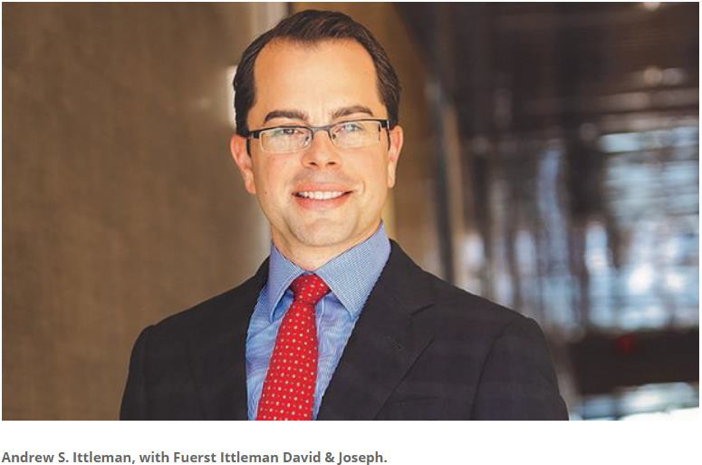
Andrew S. Ittleman is a founding partner with Fuerst Ittleman David & Joseph in Miami. He concentrates his practice on compliance and transactional matters for regulated businesses and government enforcement actions. Contact him at aittleman@fidjlaw.com.

Click here to read the full article.